
Desoxyn
AMPHETAMINES · METHAMPHETAMINE HYDROCHLORIDE · TABLET
Key facts
- Drug class
- CNS Stimulant · Amphetamines
- Active ingredient
- methamphetamine hydrochloride
- FDA-approved ages
- ADHD: pediatric patients 6 years and older
- Form and strengths
- Tablet; 5 mg tablets
- Usual dose and maximum (label)
- Start 5 mg once or twice daily; usual range 20–25 mg/day.
- Duration
- The label gives no duration of effect (half-life 4–5 hours).
- DEA schedule
- Schedule II controlled substance (CII)
- Generic
- Generic available (see Generic manufacturers)
- Label date
- Prescribing Information revised 09/2024 (Drugs@FDA)
Label last checked: Oct 2026 — Prescribing Information revised 09/2024 (Drugs@FDA) · Last medical review: October 29, 2026
Educational information only, not medical advice. Do not start, stop or change a medication without your prescriber. Medical disclaimer
What it is
Desoxyn is a prescription stimulant tablet containing methamphetamine. It is rarely used and is approved only for ADHD in children 6 and older.
Methamphetamine hydrochloride 5 mg tablets (Ajenat; NDA 005378; label revised 09/2024). Indicated for ADHD in pediatric patients 6 years and older; the current label has no obesity indication. Absorbed from the GI tract; hepatic metabolism (aromatic hydroxylation, N-dealkylation, deamination); biological half-life reported as 4–5 hours; urinary excretion is pH dependent, and alkaline urine significantly increases the half-life. The label does not report Tmax. Schedule II.
When considering this for a patient
Desoxyn is seldom used. Its label covers ADHD in children 6 and older, dosed once daily or in two divided doses. The label reports a biological half-life of 4–5 hours (longer when the urine is alkaline). Published pharmacokinetic studies report an elimination half-life of about 10 hours: about 10.1 hours after oral doses (Cook 1992) and 10.2–10.7 hours for d-methamphetamine given intravenously (Mendelson 2006).
Schedule II with the class boxed warning for abuse, misuse, and addiction; assess risk carefully, educate on secure storage, and monitor. Avoid late evening doses. Warnings match the amphetamine class (cardiac risk, blood pressure and heart rate, psychiatric effects, growth, peripheral vasculopathy, serotonin syndrome, tics).
Patient profile and niche
Desoxyn may be considered in the following situations (based on its label):
- Children 6 and older with ADHD for whom the prescriber has a specific reason to choose methamphetamine.
- Patients for whom once-daily or twice-daily dosing, as the label allows, fits the day.
Less suited for adults (the label indication is pediatric), or when abuse or diversion risk is a concern.
When it is active
The Desoxyn label does not give an onset time, peak time, or duration. It reports a biological half-life of 4–5 hours (longer if the urine is alkaline) and allows once-daily or twice-daily dosing.
The interactive tool below shows a schematic only. The peak is drawn at about 3 hours. The Desoxyn label does not give a peak time. A published review of amphetamine pharmacokinetics reports that blood levels of methamphetamine peak about 3 hours after a dose by mouth (Markowitz and Patrick 2017, citing Cook 1992). That figure does not come from studies of Desoxyn tablets, so it is an estimate.
Enter the times that match your (or your child’s) typical day. The curve shows relative plasma level over clock time.
The curve shows relative plasma concentration (not guaranteed clinical effect).
Everyone is different. This is a general guide, not a prediction for any one person.
How it works
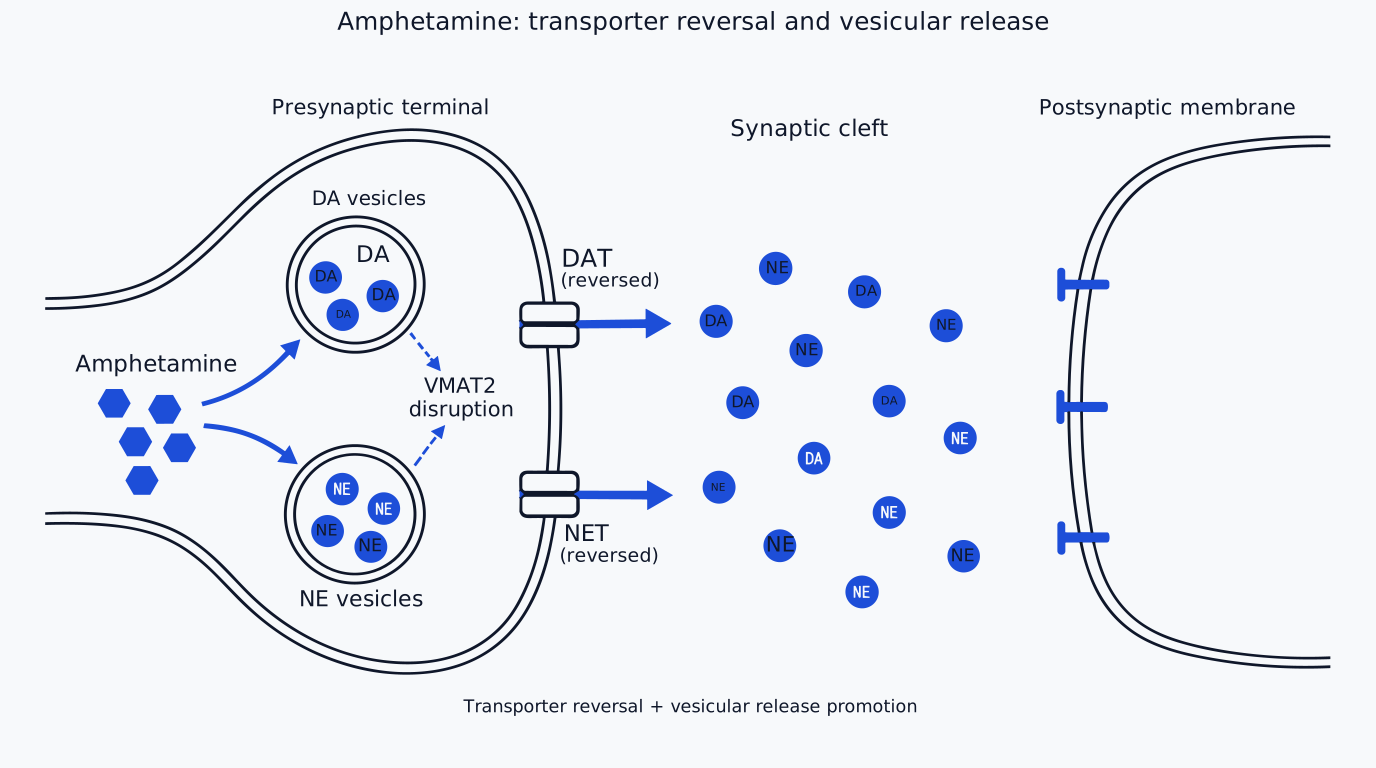
Methamphetamine is an amphetamine-class stimulant. Like amphetamine, it blocks the reuptake of dopamine and norepinephrine and increases their release, which supports attention and impulse control.
More synaptic dopamine
More synaptic norepinephrine
Per the DESOXYN label, amphetamines are non-catecholamine sympathomimetic amines with CNS stimulant activity, and the exact mode of therapeutic action in ADHD is not known. Amphetamines block the reuptake of norepinephrine and dopamine into the presynaptic neuron and increase the release of these monoamines into the extraneuronal space.
Formulations and duration
5 mg tablets taken once daily or in two divided doses.
| STRENGTH | 5 mg tablets |
|---|---|
| APPROVED AGES | ADHD: pediatric patients 6 years and older |
| ADMINISTRATION | Once daily or in two divided doses; avoid late evening doses |
| AVAILABILITY | Orange Book RX (brand and AA generics); current stock not confirmed |
Appearance
Desoxyn and generic methamphetamine tablets (FDA labels):
- Desoxyn 5 mg — white tablet, “OV” on one side and “12” on the other; bottles of 100 (NDC 82983-418-10)
- Hikma generic 5 mg — debossed “54” / “681” (NDC 0054-0389-25)
- Dr. Reddy’s generic 5 mg — white, round, unscored, debossed “115” (NDC 75907-094-01)
Check the bottle label for the manufacturer and strength.
Official package photos and pill identifiers:
Generic manufacturers
Two AA-rated generic methamphetamine hydrochloride tablets are listed in the Orange Book.
| Product | Notes |
|---|---|
| Desoxyn (Ajenat) | NDA 005378; TE code AA |
| Hikma | ANDA 203846; AA |
| Dr. Reddy’s | ANDA 091189; AA |
Orange Book (October 2026). No DailyMed SPL for brand Desoxyn was found; the brand facts on this page come from the FDA label PDF (Drugs@FDA, 005378s032).
Common side effects
The Medication Guide lists the most common side effects as a fast or pounding heartbeat, dizziness, trouble sleeping, shaking, headache, diarrhea, and dry mouth.
| EFFECT | FREQUENCY | NOTES |
|---|---|---|
| Fast or pounding heartbeat | Among the most common (Medication Guide) | Heart rate and blood pressure are checked |
| Trouble sleeping | Among the most common (Medication Guide) | Avoid late evening doses |
| Dizziness or headache | Among the most common (Medication Guide) | Tell your clinician if it persists |
| Shaking (tremor) | Among the most common (Medication Guide) | Report it if bothersome |
| Diarrhea or dry mouth | Among the most common (Medication Guide) | Usually mild |
| Slowed growth and weight loss in children | Labeled warning | Height and weight are checked |
The label lists adverse reactions by system without percentages: elevated blood pressure, tachycardia, palpitation (fatal cardiorespiratory arrest reported, mostly with abuse/misuse); psychotic episodes at recommended doses, dizziness, dysphoria, overstimulation, euphoria, insomnia, tremor, restlessness, headache, tics; diarrhea, constipation, dry mouth, unpleasant taste, intestinal ischemia; urticaria; impotence and libido changes, frequent or prolonged erections; rhabdomyolysis. Boxed warning for abuse, misuse, and addiction; assess risk before prescribing and reassess during treatment. Warnings include risks to patients with serious cardiac disease, increased blood pressure and heart rate, psychiatric adverse reactions (screen for bipolar disorder risk), long-term suppression of growth in pediatric patients, peripheral vasculopathy including Raynaud’s phenomenon, seizures, serotonin syndrome with serotonergic drugs, and motor and verbal tics/worsening of Tourette’s syndrome. Contraindicated in patients with known hypersensitivity to amphetamine products or other ingredients (angioedema and anaphylaxis have been reported with other amphetamine products), and with MAOIs, during use or within 14 days after stopping, including linezolid or intravenous methylene blue, because of the risk of hypertensive crisis. Acidifying agents (e.g., ascorbic acid) decrease and alkalinizing agents (e.g., sodium bicarbonate) increase amphetamine blood levels; adjust the dose based on response (label 2 and 7.1).
Dosing considerations
Children 6 and older usually start at 5 mg once or twice a day, increasing by 5 mg weekly. The usual dose is 20–25 mg a day.
Before starting, your clinician should ask about heart problems, including any family history of sudden death or irregular heart rhythm, do a physical exam, and ask about tics or Tourette’s syndrome in you or your family.
Ages 6 and older: start 5 mg once or twice daily; increase by 5 mg at weekly intervals based on response; recommended range 20–25 mg/day, given once daily or in two divided doses. Avoid late evening doses. Acidifying agents lower and alkalinizing agents raise levels; adjust dosage accordingly.
Pre-treatment screening (label 2.1): assess for cardiac disease with a careful history, family history of sudden death or ventricular arrhythmia, and physical exam; assess the family history and clinically evaluate for motor or verbal tics or Tourette’s syndrome.
Baseline ECG: The label’s pre-treatment cardiac assessment (above) is history, family history and examination; it does not call for a routine ECG. NICE NG87 states that an ECG is not needed before starting stimulants unless a feature listed in 1.7.5 is present (e.g., congenital heart disease or previous cardiac surgery, sudden cardiac death in a first-degree relative under 40, exertional breathlessness or syncope, paroxysmal palpitations, cardiac-sounding chest pain, signs of heart failure, a murmur, or adult hypertension) or a co-existing condition is treated with a medicine that adds cardiac risk; those features call for a cardiology opinion (1.7.4–1.7.5). The AAP 2019 guideline asks for a history of cardiac symptoms and a family history of sudden death, WPW, hypertrophic cardiomyopathy and long QT, with further evaluation if any risk factor is present. A Canadian joint position statement (Warren 2009) and the European ADHD Guidelines Group (Graham 2011) do not recommend routine ECG screening; Graham notes that the American Heart Association’s 2008 statement first proposed an ECG as standard and then left it to clinician discretion. In one US screening series, 8.1% of ECGs were abnormal but heart disease was found in 0.3% (Mahle 2009).
Planned breaks from medicine (weekends and holidays)
Some families leave out doses on weekends or during school holidays. This is sometimes called a medication holiday or treatment break. Plan any break with the prescriber instead of stopping on your own.
Breaks are usually considered for poor appetite, slow weight gain, trouble sleeping, slowed growth, or to see whether the medicine is still needed. The label says children who are not growing or gaining weight as expected may need to have treatment paused.
In studies, breaks helped appetite, sleep and weight gain. It is less clear that they help a child end up taller: one older study saw a height benefit only after two summers off, and a newer trial found that weekend breaks did not speed up height growth. ADHD symptoms can return on days off, so breaks tend to suit lower-pressure times. If you try one, watch how things go at home and with friends, and restart if problems come back.
Growth warning (label 5.5): monitor height and weight during treatment of pediatric patients; those not growing or gaining height or weight as expected may need treatment interrupted. NICE NG87 lists a planned break among options when weight loss is a concern (1.8.6), suggests considering a break over school holidays to allow catch-up growth when height is significantly affected (1.8.7), and advises periodic trial periods off medication or at a lower dose when the balance of benefit and harm suggests it (1.10.3). The AACAP 2007 practice parameter suggests considering a holiday when height or weight crosses two percentile lines, provided off-medication weekends or summers are not markedly impairing, and regards low-stress periods such as vacations (not the start of a school year) as a good time for a discontinuation trial.
Evidence (see Clinical evidence: Growth, below): in a 4-week RCT of twice-daily IR methylphenidate, weekend placebo reduced insomnia without a significant rise in weekend parent or Monday teacher ratings (Martins 2004, n=40). In children with stimulant-associated weight loss, school-days-only dosing increased weight velocity but not height velocity, and most families in that arm resumed after-school dosing because of symptoms (Waxmonsky 2020). Two summers off methylphenidate were followed by a height benefit; one summer was not (Klein 1988). A review of 22 studies found 25–70% of families use breaks (Ibrahim 2015). In the observational MTA follow-up, consistent long-term use was associated with about 2.4 cm lower adult height (Swanson 2017). Data in adults are sparse.
Pregnancy and breastfeeding
Tell your clinician if you are pregnant, plan to become pregnant, or are breastfeeding. Babies born to mothers taking amphetamines during pregnancy have a higher risk of premature birth and low birth weight. Newborns exposed to amphetamines before birth should be watched for withdrawal symptoms such as feeding problems, irritability, agitation, or unusual sleepiness.
Breastfeeding is not recommended while taking Desoxyn, because the medicine passes into breast milk.
A national pregnancy registry collects information about ADHD medicines used during pregnancy. You or your clinician can enroll by calling 1-866-961-2388.
Pregnancy (label 8.1): epidemiologic studies and postmarketing reports over decades of methamphetamine and amphetamine use have not identified a drug-associated risk of major birth defects or miscarriage; neonates exposed in utero are at risk for withdrawal after delivery. Premature delivery and low birth weight have been seen in infants of mothers taking amphetamines. Amphetamines cause vasoconstriction that may reduce placental perfusion and can stimulate uterine contractions; monitor exposed infants for withdrawal (feeding difficulties, irritability, agitation, excessive drowsiness). Animal data: published data show methamphetamine during organogenesis caused malformations and pup mortality in mammals at doses equivalent to the maximum recommended human dose (mg/m² basis); in rats, exposure during gestation and/or lactation increased neonatal pup mortality and delayed somatic and neurobehavioral development. Registry: National Pregnancy Registry for ADHD Medications (as named in the label), 1-866-961-2388.
Lactation (label 8.2): limited case reports show methamphetamine and its active metabolite amphetamine in human milk, with no reported adverse effects in breastfed infants; long-term neurodevelopmental effects are unknown, and large doses might interfere with milk production. The label advises that breastfeeding is not recommended during treatment.
Outside the label: LactMed (NCBI Bookshelf, “Methamphetamine,” revised Jul 2026; NBK501612) says there is no published experience with prescribed methamphetamine during breastfeeding, so another medicine may be preferred, especially for a newborn or preterm infant, and notes one expert advises against therapeutic amphetamine use while nursing; its remaining data concern recreational use, during which breastfeeding is generally discouraged. This is LactMed’s summary of published data, not FDA label content.
Availability and shortages
LISTED RX · STOCK NOT CONFIRMED Desoxyn and two generics are listed as active prescription products in the FDA Orange Book. Methamphetamine is not on the FDA or ASHP shortage lists, but current pharmacy stock could not be verified and many pharmacies do not carry it.
Call ahead; the pharmacy may need to order it.
Orange Book (October 2026): Desoxyn (NDA 005378, Ajenat) RX/AA; Hikma and Dr. Reddy’s RX/AA. FDA Drug Shortages and ASHP current list: no methamphetamine entry (checked Oct 20, 2026). Wholesaler stock: not confirmed. ASHP list.
How Desoxyn compares to other amphetamine products
Desoxyn is one of several amphetamine-family options. Effect windows below come from each product’s FDA labeling (clinical study time points or dosing intervals), not head-to-head comparisons; amphetamine products are not interchangeable milligram for milligram.
| Medication | Studied effect window / dosing (label) | Release design | Key practical notes |
|---|---|---|---|
| Desoxyn (methamphetamine tablet) | Once daily or in two divided doses; t½ 4–5 h | Immediate release | 5 mg tablets; ADHD ages 6+. AA generics (Hikma, Dr. Reddy’s). |
| Evekeo (amphetamine sulfate tablet) | Short-acting; doses 4–6 h apart (classroom study: 0.75–10 h after a single morning dose) | Immediate release; racemic 1:1 d:l | Also labeled for narcolepsy and short-term exogenous obesity. AA generics. |
| Adderall (mixed salts IR tablet) | Short-acting; first dose on awakening, 1–2 more at 4–6 h intervals | Immediate release; 3:1 d- to l-amphetamine salts | Brand (Teva) and many AB generics; IR tablets on FDA and ASHP shortage lists. |
| Zenzedi (dextroamphetamine tablet) | Short-acting; first dose on awakening, 1–2 more at 4–6 h intervals | Immediate release | Seven strengths 2.5–30 mg; ADHD ages 3–16. AA generics. |
| Dexedrine Spansule (dextroamphetamine capsule) | Once-daily option; Tmax ~8 h (15 mg) | Sustained-release beads (initial dose released promptly) | Brand (Amneal) listed available; Teva generic on ASHP back order. |
Other amphetamine-family pages: Adderall, Adderall XR, Adzenys XR-ODT, Arynta, Dexedrine Spansule, Dyanavel XR, Evekeo, Evekeo ODT, Mydayis, ProCentra, Vyvanse, Xelstrym, Zenzedi.
Clinical evidence from published studies
These findings come from published research, not from the FDA label. The FDA label is the official source for approved uses, doses and warnings. Results from studies may not apply to you. Uses marked off-label are not FDA-approved. Talk with your prescriber before making any change.
Items summarize peer-reviewed publications, checked against the PubMed abstract (or full text where stated); figures are reproduced only where the source states them. The FDA label governs approved indications and dosing. Off-label items are not FDA-approved uses. Industry funding or sponsor affiliation is noted where the PubMed record shows it; absence of a note does not mean no industry involvement.
Studies of this medicine (2 studies)
-
Methamphetamine (oral)
In male volunteers given oral methamphetamine, the average elimination half-life was about 10 hours (range 6.4–15.1). This is longer than the 4–5 hours stated in the Desoxyn label.
Oral S-(+)-methamphetamine-d3 0.125 and 0.25 mg/kg, before and after 13 days of slow-release S-methamphetamine; one-compartment model with lag time. Mean t½ 10.1 h (6.4–15.1). Time to peak is not stated in the abstract (needs full-text check), so it is not given here.
Cook CE, Jeffcoat AR, Sadler BM, et al. (1992). Pharmacokinetics of oral methamphetamine and effects of repeated daily dosing in humans. Drug Metab Dispos 20(6):856-62. PubMed 1362938
-
Methamphetamine (IV, research setting)
In a laboratory study using intravenous doses, d-methamphetamine had a half-life of about 10 to 11 hours and raised heart rate and blood pressure for about 6 hours. It was not a study of Desoxyn tablets.
Human pharmacology of methamphetamine stereoisomers (IV). Elimination t½: d-MA 10.2–10.7 h, l-MA 13.3–15.0 h. d-MA (0.25, 0.5 mg/kg, racemic) increased HR, BP and respiratory rate for 6 h.
Mendelson J, Uemura N, Harris D, et al. (2006). Human pharmacology of the methamphetamine stereoisomers. Clin Pharmacol Ther 80(4):403-20. DOI · PubMed 17015058
Heart and blood pressure (3 studies)
-
Stimulants and nonstimulants (children and teens)
The 2019 American Academy of Pediatrics guideline says stimulants have not been shown to raise the risk of sudden death. Before starting, clinicians should ask about heart symptoms and a family history of sudden death or inherited heart rhythm or muscle conditions, and arrange further evaluation if any risk factor is present. It describes an ECG as part of that extra evaluation for nonstimulants when risk factors are present.
AAP clinical practice guideline (Wolraich 2019), full text: obtain history of specific cardiac symptoms and family history of sudden death, cardiovascular symptoms, WPW, HCM and long QT before stimulants; if risk factors are present, obtain additional evaluation. For nonstimulants with risk factors, the additional evaluation is described as an ECG, with pediatric cardiology referral if abnormal. No routine ECG is recommended for patients without risk factors.
Wolraich ML, Hagan JF Jr, Allan C, et al. (2019). Clinical Practice Guideline for the Diagnosis, Evaluation, and Treatment of Attention-Deficit/Hyperactivity Disorder in Children and Adolescents. Pediatrics 144(4). DOI · PubMed 31570648
-
ADHD medicines (class)
The European ADHD Guidelines Group found no evidence that a routine ECG before starting ADHD medicine adds benefit. It notes that the American Heart Association first suggested an ECG as standard in 2008 and then left it to the clinician’s judgment. A 2009 Canadian joint statement likewise recommends a careful history and examination, with an ECG or cardiology referral only when these suggest a problem.
European Guidelines Group (EUNETHYDIS) review of adverse effects, full text: “no current evidence to suggest an incremental benefit for routine ECG assessment” before medication; AHA in 2008 initially recommended ECG as standard, then changed this to clinician discretion; ECG screening not considered cost-effective for preventing sudden death in the general pediatric population. Canadian Paediatric Society / Canadian Cardiovascular Society / CACAP joint statement (Warren 2009, abstract): thorough history and physical examination; no routine ECG screening or cardiac subspecialist consultation unless indicated by history or examination.
Graham J, Banaschewski T, Buitelaar J, et al. (2011). European guidelines on managing adverse effects of medication for ADHD. Eur Child Adolesc Psychiatry 20(1):17-37. DOI · PubMed 21042924
See also: Warren AE, Hamilton RM, Bélanger SA, et al. (2009). Can J Cardiol. DOI · PubMed 19898693
-
Children with ADHD (screening ECG)
At one U.S. center, 1,470 children with ADHD had a screening ECG. About 8% were read as abnormal, but heart disease was found in only 5 children (0.3%), so most abnormal results were false alarms. Finding each true case cost about $17,000 in testing.
Retrospective review of screening ECGs in 1,470 patients <21 y with ADHD (Apr–Sep 2008): 119 abnormal (8.1%); follow-up included 63 echocardiograms, 5 stress tests, 9 Holters; cardiac disease in 5 (0.3%: ventricular pre-excitation 2, bicuspid aortic valve 2, secundum ASD 1); positive predictive value 4.2%; mean cost $58 per child and $17,162 per true positive. The authors note screening can find asymptomatic disease but with low PPV.
Mahle WT, Hebson C, Strieper MJ (2009). Electrocardiographic screening in children with attention-deficit hyperactivity disorder. Am J Cardiol 104(9):1296-9. DOI · PubMed 19840580
Growth (5 studies)
-
Stimulants (mostly OROS methylphenidate), children 5–12
Children whose weight dropped after starting a stimulant were randomly assigned to medicine on school days only (a planned break on weekends and holidays), a daily high-calorie snack, or monthly checks. All three helped weight gain, but none of them sped up growth in height. Most families in the school-days-only group went back to giving the medicine after school because symptoms got worse.
RCT, 230 children aged 5–12 starting stimulants (78%, mainly OROS-MPH) or behavioral treatment for 30 months; children with a BMI decline >0.5 z after 6 months (n=71) were randomized to monthly monitoring, drug holidays (medication limited to school days) or a 150-kcal daily supplement. Weight velocity rose after randomization across all arms (β=0.271, SE 0.027, p<.001); per actual use, supplementation (p<.01) and holidays (p<.05) increased weight velocity more than monitoring. No arm increased height velocity. Full text: parents gave medication on only 5% of weekend days in the holiday arm; 16 of 23 (70%) reverted to after-school dosing because of worsening symptoms.
Waxmonsky JG, Pelham WE 3rd, Campa A, et al. (2020). A Randomized Controlled Trial of Interventions for Growth Suppression in Children With Attention-Deficit/Hyperactivity Disorder Treated With Central Nervous System Stimulants. J Am Acad Child Adolesc Psychiatry 59(12):1330-1341. DOI · PubMed 31473291
-
Methylphenidate (immediate-release, twice daily)
In a 4-week trial in boys taking methylphenidate twice a day, swapping in a placebo on weekends led to less trouble sleeping and a trend toward better appetite. ADHD symptoms on weekends (parent ratings) and on the following Monday (teacher ratings) did not rise significantly. The study was small and short.
Double-blind RCT, 28 days, boys with ADHD: MPH b.i.d. 7 days/week (n=21) vs weekdays with weekend placebo (n=19). No significant group difference in parent weekend ratings (endpoint p=0.41, ES 0.26) or Monday teacher ratings (p=0.99, ES 0.002). Weekend placebo: less insomnia (F=3.96, p=0.05) and a trend to less appetite interference (F=3.18, p=0.08). Growth was not an outcome.
Martins S, Tramontina S, Polanczyk G, et al. (2004). Weekend holidays during methylphenidate use in ADHD children: a randomized clinical trial. J Child Adolesc Psychopharmacol 14(2):195-206. DOI · PubMed 15319017
-
Methylphenidate (long-term use)
Children on long-term methylphenidate were randomly assigned to stop or continue it over two summers. One summer off was followed by more weight gain but no height difference; two summers off had a significant positive effect on height. The study could not show whether this changes final adult height.
Controlled withdrawal study: hyperactive children on long-term MPH randomized to be off or remain on medication over two consecutive summers. After one summer: no height difference, higher weight in the off-medication group. After two summers: significant positive effect on height (not weight). Authors note the results do not address long-term effects on height. Needs full-text check: sample size and effect sizes are not in the abstract.
Klein RG, Landa B, Mattes JA, et al. (1988). Methylphenidate and growth in hyperactive children. A controlled withdrawal study. Arch Gen Psychiatry 45(12):1127-30. DOI · PubMed 3058088
-
ADHD medicines (mostly stimulants), children and teens
A review of 22 studies from 1972 to 2013 found that 25–70% of families take breaks from ADHD medicine, most often during school holidays. Breaks are used to check whether medicine is still needed and to manage side effects. Longer breaks were linked to better growth, and shorter breaks could reduce sleep problems and improve appetite.
Literature review (22 studies, 1972–2013) of drug holidays in children and adolescents. Prevalence 25–70% of families, more often in school holidays; purposes: testing ongoing need, managing adverse effects and tolerance. Positive impact on growth with longer breaks; shorter breaks could reduce insomnia and improve appetite. Study quality not graded in the abstract.
Ibrahim K, Donyai P (2015). Drug Holidays From ADHD Medication: International Experience Over the Past Four Decades. J Atten Disord 19(7):551-68. DOI · PubMed 25253684
-
Stimulants (MTA follow-up into adulthood)
In the long-term follow-up of the MTA study, young adults who had taken stimulants consistently through childhood were on average about 2.4 cm shorter than those who took them inconsistently, and treated groups were about 2.6 cm shorter than those who took little or none. Consistent long-term use was not linked to fewer adult ADHD symptoms. These groups were not randomized.
Observational follow-up of the MTA (579 randomized; 515 followed; 289 classmates as local norms), outcomes at ~25 years. Adult height: Consistent/Inconsistent users 2.55 ± 0.73 cm shorter than Negligible users (p<.0005); Consistent 2.36 ± 1.13 cm shorter than Inconsistent (p<.04). Naturalistic-subgroup comparisons for symptom severity were not significant. Full text: height was measured in 402 ADHD participants (Consistent subgroup n=33).
Swanson JM, Arnold LE, Molina BSG, et al. (2017). Young adult outcomes in the follow-up of the multimodal treatment study of attention-deficit/hyperactivity disorder: symptom persistence, source discrepancy, and height suppression. J Child Psychol Psychiatry 58(6):663-678. DOI · PubMed 28295312
Psychosis and mania (1 study)
-
Stimulants: prescribed vs non-prescribed use (including methamphetamine)
A review of 77 studies found psychosis was uncommon with prescribed stimulants (about 0.6% new cases; 0.2% prevalence) but common with non-prescribed use, which often involved high-dose methamphetamine (about 33%). Psychosis on prescribed stimulants often resolved after the dose was lowered or the medicine stopped. Few prescribed-use studies involved methamphetamine itself.
SR/MA (PRISMA; to Apr 2025): 77 studies (n=687,912), 9 therapeutic, 68 nontherapeutic. Therapeutic use was mainly oral methylphenidate or amphetamine at guideline doses; nontherapeutic use commonly high-dose methamphetamine or mixed stimulants by IV or smoked routes. Pooled incidence with therapeutic use 0.6% (95% CI 0.3–0.9); prevalence 0.2% (0.0–0.3) therapeutic vs 32.8% (25.5–40.2) nontherapeutic. Therapeutic cases often resolved with dose reduction or discontinuation.
Jangra D, Tejwani R, Ahluwalia Y, et al. (2026). Stimulant-induced Psychosis: A Comparative Systematic Review and Meta-analysis of Psychotic Outcomes from Therapeutic and Nontherapeutic Use of Stimulants. J Addict Med. DOI · PubMed 41874961
Pregnancy (3 studies)
These research findings do not replace the FDA label. For what the label says, see Pregnancy and breastfeeding above.
-
Non-prescribed methamphetamine use in pregnancy (not Desoxyn treatment)
A meta-analysis of 8 studies (626 exposed pregnancies) found that methamphetamine use in pregnancy was linked to slightly earlier birth and smaller babies (about 245 g lighter), but not to more pre-eclampsia or high blood pressure. These women used methamphetamine without a prescription, so the results may not apply to prescribed Desoxyn.
SR/MA of 8 retrospective/case-control studies: 626 methamphetamine-exposed pregnancies vs 2,626 controls (exposure by self-report, urine or meconium). Gestational age MD −0.90 weeks; birth weight MD −245 g; Apgar MD −0.94; pre-eclampsia RR 1.77 (95% CI 0.75–4.14) and hypertensive complications RR 1.62 (0.37–7.06), both not significant. Confounding by other substance use likely; no prescribed-use data.
Kalaitzopoulos DR, Chatzistergiou K, Amylidi AL, et al. (2018). Effect of Methamphetamine Hydrochloride on Pregnancy Outcome: A Systematic Review and Meta-analysis. J Addict Med 12(3):220-226. DOI · PubMed 29509557
-
Non-prescribed methamphetamine use in pregnancy (not Desoxyn treatment)
A meta-analysis of 8 observational studies found that prenatal methamphetamine exposure was linked to higher odds of preterm birth, low birth weight and babies small for their age. The exposures were non-prescribed use, and the studies could not separate other risk factors.
SR/MA (search to Dec 24, 2021; 8 observational studies). Prenatal methamphetamine exposure associated with preterm birth OR 2.64 (95% CI 1.89–3.70), low birth weight OR 2.83 (1.09–7.38) and SGA OR 1.44 (1.04–1.99). Exposure ascertained by urine, meconium and other samples; non-prescribed use.
Rastegar-Pouyani N, Fakhari F, Lalani AR, et al. (2025). Prenatal Exposure to Methamphetamine and Its Association With Birth Outcomes: A Meta-Analysis. Birth Defects Res 117(7):e2488. DOI · PubMed 40626732
-
Non-prescribed methamphetamine use in pregnancy (not Desoxyn treatment): child development
A review of 38 studies, with a meta-analysis of 14, linked prenatal methamphetamine exposure through maternal (non-prescribed) use to poorer intellectual functioning, memory and language in children. The authors note small samples, differences between studies and limited control of other factors.
SR (to Dec 2020; 38 articles, birth to 16 years) with random-effects MA of 14 studies: intellectual functioning d=0.89 (95% CI 0.47–1.30), problem solving d=0.82 (0.07–1.56), short-term memory d=0.91 (0.38–1.43), language d=0.74 (0.30–1.18). Quality appraised with Newcastle-Ottawa; authors flag limited sample size, heterogeneity and confounding.
Kunkler C, Lewis AJ, Almeida R (2022). Methamphetamine exposure during pregnancy: A meta-analysis of child developmental outcomes. Neurosci Biobehav Rev 138:104714. DOI · PubMed 35661684
Frequently asked questions
What is Desoxyn?
A prescription tablet of methamphetamine hydrochloride (5 mg) approved for ADHD in children 6 and older.
Is Desoxyn approved for weight loss?
No. The current label (revised 9/2024) lists ADHD only.
What is the half-life of Desoxyn?
The label reports 4 to 5 hours, longer when the urine is alkaline. Published pharmacokinetic studies report about 10 hours.
How is Desoxyn dosed?
Start 5 mg once or twice a day, increase by 5 mg weekly, usually to 20–25 mg a day given once daily or in two divided doses.
Is there a generic Desoxyn?
Yes. Hikma and Dr. Reddy’s make AA-rated methamphetamine hydrochloride 5 mg tablets.
Can adults take Desoxyn?
The label indication is for pediatric patients 6 and older. Use in adults would be outside the labeled indication; discuss with your clinician.
Is Desoxyn available?
It is listed as an active prescription product and is not on shortage lists, but many pharmacies do not stock it. Call ahead.
Why is Desoxyn rarely prescribed?
It has the same boxed warning for abuse, misuse, and addiction as other stimulants, and many other amphetamine options exist. Prescribers weigh the individual risks and benefits.
How long does Desoxyn last?
The label does not give a duration of effect. It reports a biological half-life of 4 to 5 hours and allows dosing once daily or in two divided doses (label sections 2.2 and 12.3).
How quickly does Desoxyn start working?
The label does not say how soon methamphetamine tablets start working or when blood levels peak. Ask your prescriber what to expect.
How is Desoxyn taken?
By mouth, once daily or split into two doses a day. The usual starting dose is 5 mg once or twice daily, raised by 5 mg at weekly intervals if needed. Avoid taking it late in the evening because of the risk of insomnia (label sections 2.2 and 2.3).
Can Desoxyn be taken with food?
The current methamphetamine tablet label does not give food instructions or report food-effect data. Ask your pharmacist if you have questions about timing with meals.
Does Desoxyn cause a crash or rebound as it wears off?
The Desoxyn label does not describe a “crash” or rebound effect. It is an immediate-release tablet with a half-life of 4 to 5 hours, and the label does not give a duration of effect (label section 12.3). If ADHD symptoms, irritability or tiredness come back as a dose wears off, tell your prescriber; the timing or dose may need adjusting.
Desoxyn vs Adderall — what’s the difference?
Desoxyn contains methamphetamine; Adderall contains mixed amphetamine salts. Both are immediate-release Schedule II stimulants. Desoxyn is taken once daily or in two divided doses and comes as a 5 mg tablet; Adderall is usually taken on awakening with one or two more doses 4 to 6 hours apart. See the Adderall page and the comparison table above.
What should I do if I miss a dose of Desoxyn?
The methamphetamine tablet label does not give instructions for a missed dose. It says to avoid taking it late in the evening because of the risk of insomnia (label section 2.2). The label only says to take it exactly as prescribed (Medication Guide), so do not take extra to make up for a missed dose; ask your prescriber or pharmacist what to do.
What are the most common side effects of Desoxyn?
The Medication Guide lists a fast or pounding heartbeat, dizziness, trouble sleeping, shaking, headache, diarrhea and dry mouth. These are not all the possible side effects; call your prescriber for advice about side effects that bother you.
Is an ECG (heart tracing) needed before starting?
Usually not. Before prescribing, the clinician should ask about fainting, chest pain, a racing heartbeat, known heart problems, and any family history of sudden death or heart rhythm problems, and do a physical exam. An ECG or a visit to a heart specialist is used when any of these raise concern. UK, Canadian and European guidance does not call for a routine ECG when there are no such warning signs.
Can my child take breaks from the medicine on weekends or over the summer?
Sometimes, but plan it with the prescriber. Breaks can help with appetite, weight gain and sleep, and the label says children who are not growing or gaining weight as expected may need treatment paused. Breaks have not been shown to reliably make children taller, and ADHD symptoms can come back on days off, so it depends on how much your child struggles without the medicine. A break can also show whether the medicine is still needed.
Can I take Desoxyn while pregnant or breastfeeding?
Tell your clinician if you are pregnant or planning a pregnancy. The Desoxyn label reports a higher risk of premature birth and low birth weight with amphetamines in pregnancy and advises watching newborns for withdrawal. Breastfeeding is not recommended during treatment. A pregnancy registry for ADHD medicines can be reached at 1-866-961-2388.
Prescribing guidelines
Amphetamine-class stimulants, like methylphenidates, are first-line pharmacologic options for school-age children, adolescents, and adults with ADHD per major guidelines when medication is indicated.
Sources
- Ajenat Pharmaceuticals, LLC. Desoxyn (methamphetamine hydrochloride tablets), CII. Prescribing Information, revised 09/2024. Drugs@FDA (accessed Oct 2026).
- Hikma Pharmaceuticals USA Inc. Methamphetamine hydrochloride tablets, CII. Prescribing Information, revised 09/2024. DailyMed (accessed Oct 2026).
- Dr. Reddy’s Laboratories. Methamphetamine hydrochloride tablets, CII. Prescribing Information, revised 10/2024. DailyMed (accessed Oct 2026).
- U.S. Food and Drug Administration. Approved Drug Products with Therapeutic Equivalence Evaluations (Orange Book), data files dated October 2026. FDA.
- U.S. Food and Drug Administration. Drug Shortages database, accessed Oct 20, 2026. FDA.
- American Society of Health-System Pharmacists. Current Drug Shortage Bulletins list, accessed Oct 20, 2026. ASHP.
- Wolraich ML, Hagan JF Jr, Allan C, et al.; American Academy of Pediatrics Subcommittee on Children and Adolescents with ADHD. Clinical Practice Guideline for the Diagnosis, Evaluation, and Treatment of Attention-Deficit/Hyperactivity Disorder in Children and Adolescents. Pediatrics. 2019;144(4):e20192528. AAP.
- Centers for Disease Control and Prevention. Clinical Care of ADHD in Children (summary of the AAP guideline; updated Oct 21, 2026). CDC (accessed 2026).
- Cook CE, Jeffcoat AR, Sadler BM, et al. Pharmacokinetics of oral methamphetamine and effects of repeated daily dosing in humans. Drug Metab Dispos. 1992;20(6):856–862. PubMed 1362938.
- Mendelson J, Uemura N, Harris D, et al. Human pharmacology of the methamphetamine stereoisomers. Clin Pharmacol Ther. 2006;80(4):403–420. PubMed 17015058.
- Markowitz JS, Patrick KS. The clinical pharmacokinetics of amphetamines utilized in the treatment of attention-deficit/hyperactivity disorder. J Child Adolesc Psychopharmacol. 2017;27(8):678–689. doi:10.1089/cap.2017.0071; PubMed 28910145.
- National Institute for Health and Care Excellence. Attention deficit hyperactivity disorder: diagnosis and management (NG87), 2018, updated 2019; recommendations 1.7.3–1.7.5, 1.7.20–1.7.22, 1.8.6–1.8.7 and 1.10.3. NICE (accessed Oct 2026).
- Pliszka S, AACAP Work Group on Quality Issues. Practice parameter for the assessment and treatment of children and adolescents with attention-deficit/hyperactivity disorder. J Am Acad Child Adolesc Psychiatry. 2007;46(7):894-921. PubMed 17581453.
- Drugs and Lactation Database (LactMed). Methamphetamine. National Institute of Child Health and Human Development; revised Jul 2026. NCBI Bookshelf NBK501612.